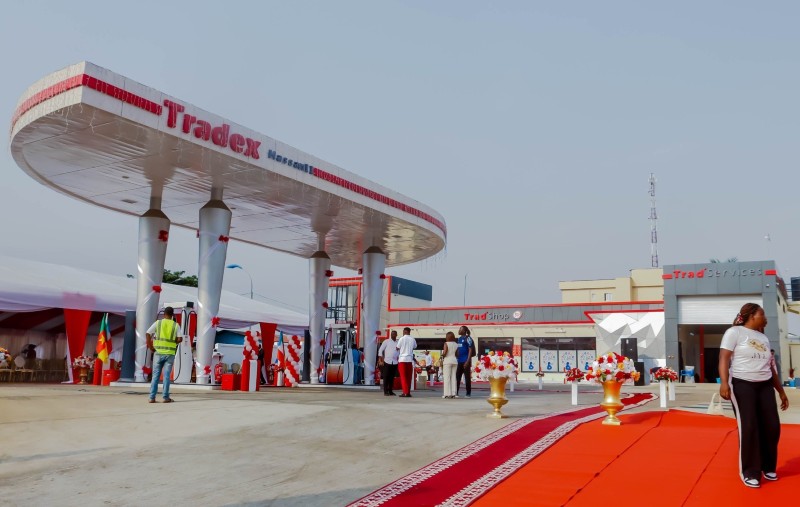
A Structural and Financial Diagnosis of Cameroon's Second-Largest Petroleum Marketer
Executive Summary
Tradex S.A., Cameroon's second-largest petroleum marketer, presents a striking paradox: a highly profitable operating company trapped in a captured governance structure. In 2025, consolidated revenue climbed 23% to 452.1 billion FCFA, net profit rose 11% to 16.7 billion FCFA, and market share expanded to ~28%. However, the company faces severe structural insolvency in governance terms. Controlled 54% by the state-owned SNH, Tradex functions as an uncompensated lender of last resort to illiquid state entities while its core decision-making rights are concentrated in a single individual across the shareholder, board, and strategic capital projects. Conventional financial analysis fails to capture this decay, which threatens the firm's long-term enterprise value.
Core Insights
- Governance Monopoly: A single individual simultaneously serves as SNH Conseiller n°2, Tradex Board Chair, CSTAR Refinery Project Chair, and lead mediator in major subsidiary litigation—creating an extreme concentration of authority and conflict of interest.
- Quasi-Fiscal Extraction: Over 53.9 billion FCFA (equivalent to ~3.2 years of net earnings) is locked in uncollected receivables from state-linked entities (Eneo, SCTM, Camair-Co) that do not pay on commercial terms.
- Sovereign Contagion & Capital Exposure: Tradex is heavily exposed to Cameroon's broader 10,263 billion FCFA domestic arrears and succession friction, while committing massive capital to the 372 billion FCFA CSTAR refinery project.
- Four Active Shocks: The company is impacted by an ongoing political succession standoff, a 15-year legal dispute paralyzing its Chadian subsidiary, capital risk from the CSTAR project, and systemic state arrears.
- Analytical Blind Spot: Standard financial ratios measure operating size rather than control rights, mistakenly treating uncollectible state receivables as commercial assets and board renewal as independence.
Value to Stakeholders
- For Corporate Boards & Management: Offers a decision-support framework for operating companies connected to state counterparties, illustrating how role concentration and captured governance erode asset value despite strong sales.
- For Institutional Lenders & Credit Analysts: Highlights hidden balance-sheet risks, sovereign contagion factors, and debt-recoverability models essential for pricing exposure to state-owned enterprises.
- For Policy Makers & Sovereign Risk Advisors: Demonstrates how political succession dynamics and quasi-fiscal extraction impact core energy supply chains and downstream market stability.
Access the Full Diagnostic
To read the complete corporate diagnostic, scenario models, and full verification schedule: