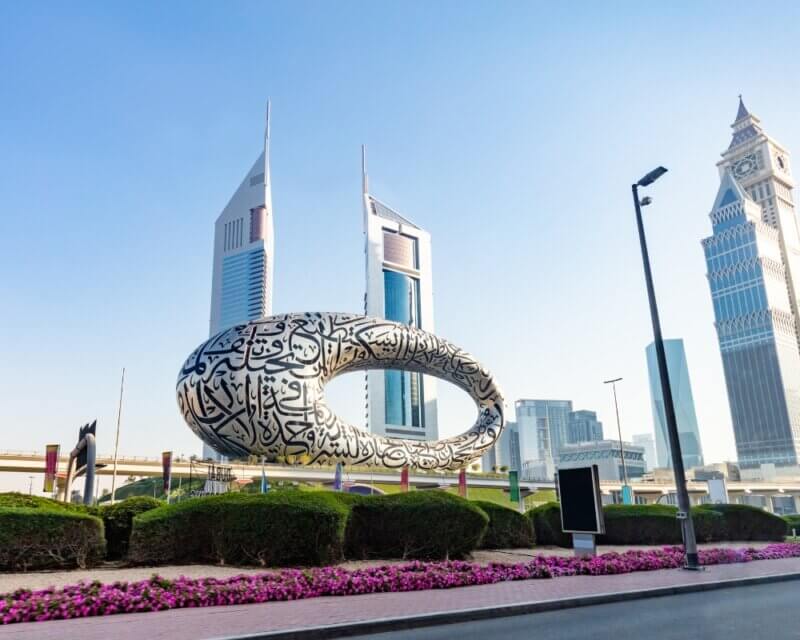
A Living House of Cards?
Executive Summary
The United Arab Emirates (UAE) has achieved extraordinary economic success, building a world-class center for finance, trade, logistics, and tourism alongside massive sovereign wealth. However, this prosperity rests on a structural vulnerability: roughly 88% of its population consists of non-citizen foreign nationals whose right to stay is strictly transactional and linked to temporary permits, with private-sector workforce participation exceeding 99% non-citizens. While this economic model has demonstrated short-term resilience—rapidly recovering from events like the 2020 COVID-19 mobility shock and the acute disruptions of the 2026 Iran war—it continuously restores cash flow rather than building long-term population commitment or structural permanence. As the global energy transition introduces a permanent, structural decline in hydrocarbon demand, relying on a transient workforce exposes the nation to deep, long-term risks.
Core Insights
- A Dual Economy Built on Transience: The UAE operates as two distinct populations in one territory—a small citizen core that holds permanent state benefits and political capital, and an 88% expatriate workforce that drives daily production but lacks long-term equity, resulting in over $50 billion in annual remittance outflows.
- Conventional Metrics Obscure Fragility: Standard economic indicators (e.g., high GDP per capita, strong sovereign balance sheets, and ease-of-doing-business rankings) reflect daily operational output and capital reserves, but fail to measure workforce retention, institutional memory, or crisis-era permanence.
- Three Discontinuities Testing the Model:
- COVID-19 (Mobility Shock): Led to a temporary 8.4% population decline in Dubai and a 6.1% GDP contraction, though the workforce returned quickly as borders reopened.
- 2026 Iran War (Security Shock): Despite direct regional conflict and minor infrastructure damage, the foreign population proved surprisingly sticky; a peak population drop of ~1.3% (61,000 residents) in March fully reversed to a record high of 4.73 million by August 2026.
- Energy Transition (Structural Shock): Unlike acute shocks, the gradual, permanent decline in hydrocarbon revenue cannot be waited out, directly threatening the fiscal capacity needed to subsidize state operations and attract foreign talent.
- Three Strategic Trajectories: The report models three long-term policy options: continuing the current transactional model (Trajectory A), creating a narrow, selective path to long-term residency/citizenship for committed foreign residents (Trajectory B), or executing rapid, broad civic reforms (Trajectory C).
Value to Stakeholders
- Policymakers & Regional Leaders: Provides a structural diagnosis highlighting the limits of transient workforce dependence, outlining actionable policy trajectories to transition from transactional economic growth to true civic and institutional permanence.
- Investors & Risk Analysts: Delivers concrete, fact-checked data on regional shock resilience, helping analysts look beyond superficial balance sheets to evaluate operational continuity and underlying demographic risk.
- Press, Media & Corporate Strategists: Offers a grounded, reality-checked perspective on Gulf economics—correcting overblown narratives around security shocks while clearly framing the real, long-term challenges of the global energy transition.
Invitation to Download
We invite you to explore the full analysis, methodology, and detailed 20-year trajectory modeling in the complete document.